SIM Binding Explained: How It Works and Why It’s Key to Preventing Digital Fraud
In an era where digital fraud runs rampant — from phishing and identity theft to cross-border scams and “digital arrest” tactics — governments and technology platforms are seeking more robust ways to protect users. One such powerful solution emerging in India’s regulatory landscape is SIM binding.
SIM binding has quickly moved from a technical concept familiar only to cybersecurity experts to a nationwide policy aimed at safeguarding citizens, national security, and digital trust.
In this blog, we break down what SIM binding is, how it works, its benefits, risks, current status (especially in India), and why it’s being positioned as a key tool in combating fraud and enhancing security.
📌 What Is SIM Binding?
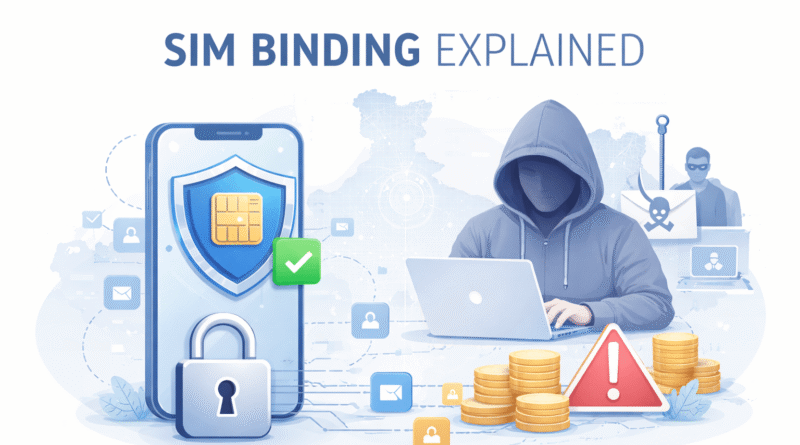
SIM binding is a security mechanism that associates a user’s digital identity or app session with a specific physical SIM card in the device.
Unlike traditional login systems — where an app works once you log in with a phone number and password — SIM binding checks that the same SIM card used during registration remains present in the device every time the app is accessed. If the SIM is removed or swapped, the service stops working.
This linkage is typically verified using unique SIM identifiers such as:
✔ IMSI (International Mobile Subscriber Identity)
✔ ICCID (SIM card serial number)
✔ Cryptographic keys stored on the SIM chip
These identifiers are nearly impossible to clone or spoof, making it a stronger authentication factor than simple SMS OTPs or passwords.
🛠️ How SIM Binding Works: A Simple Overview
Here’s a simplified flow of SIM binding in practice:
- Registration – When you sign up for a messaging or authentication app (like WhatsApp, Telegram, or banking apps), the app stores SIM identifiers during setup.
- Continuous Verification – Each time you access the app, the system checks whether the same SIM identifiers are present in your device.
- Mismatch Response – If the SIM is absent, inactive, or different, the app blocks access or requires re-authentication.
- Periodic Session Validation – For web or multi-device sessions, automatic logout may be enforced periodically (e.g., every six hours) requiring fresh SMS/QR authentication tied to the active SIM.
This approach mimics the “hardware token” concept used in high-security environments and adds a continuous trust check rather than a one-time login.
🛡️ Why Governments and Enterprises Are Pushing SIM Binding
Across sectors — from telecom regulators to financial institutions — there’s a growing recognition that traditional authentication methods aren’t enough to deter sophisticated fraudsters. Here’s why SIM binding is gaining traction:
🔐 1. Stronger Identity Assurance
SIM binding ties digital accounts to physical, government-verified mobile connections, making it harder for fraudsters to operate anonymously or without trace.
🔍 2. Improved Accountability & Traceability
With SIM binding, law enforcement and regulators can trace misuse back to a verified telecom identity, making investigations more effective against scams like phishing, impersonation, or “digital arrest.”
📉 3. Combating Cross-Border Fraud
SIM binding prevents messaging accounts from staying active when the SIM is removed or used abroad, which stops attackers from controlling stolen accounts from other countries.
📲 4. Aligns with Existing Security Practices
In sectors like banking and digital payments (UPI), SIM binding and continuous SIM checks are already widely used and accepted as part of strong customer authentication.
🇮🇳 SIM Binding Mandate in India: Current Status
India is at the forefront of adopting SIM binding as a national cybersecurity policy to regulate app-based communication platforms:
✔ The Department of Telecommunications (DoT) issued directives requiring SIM binding for OTT (over-the-top) apps such as WhatsApp, Telegram, Signal, Snapchat, ShareChat, and others.
✔ Platforms must ensure their services work only if the user’s active SIM is present in the device.
✔ Web versions of these services must auto-logout at least every six hours and require re-authentication tied to the SIM.
✔ Messaging companies have 90 days to comply and file compliance reports within 120 days.
✔ The policy builds on the Telecommunication Cyber Security Rules, 2024 and 2025.
Government representatives, including Communications Minister Jyotiraditya Scindia, have stressed that the SIM binding mandate aims to discourage fraud and strengthen national security by introducing stronger verification.
📈 Major Benefits of SIM Binding
Here’s how SIM binding enhances security and trust:
✅ Enhanced Fraud Protection
SIM binding makes it far harder for attackers to hijack accounts or impersonate users — a common tactic in phishing and social engineering attacks.
✅ Reduces Anonymous & Malicious Accounts
By tying accounts to valid mobile numbers, it helps reduce fake or “mule” accounts that feed spam, scams, and automated fraud.
✅ Stronger Anti-Impersonation Controls
Attacks like social media impersonation or fraudulent calls become traceable and less anonymous.
✅ Better Alignment with Security Best Practices
Banks and financial platforms already use SIM-based authentication — SIM binding extends that higher standard to communication apps too.
⚠️ Potential Risks & Challenges
While powerful, SIM binding isn’t without potential concerns:
❗ 1. User Experience Issues
Users might face sudden logouts or loss of access if they replace or lose their SIM card — especially abroad or when switching devices.
❗ 2. Multi-Device Complexity
Platforms that support multi-device logins (like WhatsApp Web) may need significant changes to maintain usability while enforcing SIM checks.
❗ 3. Privacy & Centralization Concerns
Some critics see SIM binding and related tools (like government-backed security apps) as expanding surveillance capabilities if not implemented with clear privacy protections.
❗ 4. Technical Implementation Challenges
Large platforms must overhaul authentication systems, manage session continuity, and balance security with minimal friction for legitimate users.
🧠 Final Thoughts: The Future of SIM Binding
SIM binding represents a significant step towards stronger, more secure digital identity verification, particularly in regions struggling with high volumes of mobile-related fraud. As India broadens its mandate — from banking apps to messaging platforms — SIM binding is poised to become a foundational security layer rather than a niche technology.
However, its success hinges on balanced implementation that protects users without unduly hampering privacy or convenience. When done right, SIM binding could redefine digital trust by tying virtual identities firmly to authenticated mobile connections.
💡 Key Takeaways:
- SIM binding links digital accounts to physical SIM cards, boosting authentication strength.
- India has mandated SIM binding for messaging platforms to curb fraud and ensure national security.
- Benefits include traceability, reduced fraud, and better alignment with modern security practices.
- Challenges include user experience hurdles and privacy considerations.