Mobile App Security: Threats, Risks, and Best Protection Strategies
In today’s digital-first ecosystem, mobile applications power everything from banking and healthcare to enterprise workflows. However, this rapid adoption has made them a prime target for cyberattacks.
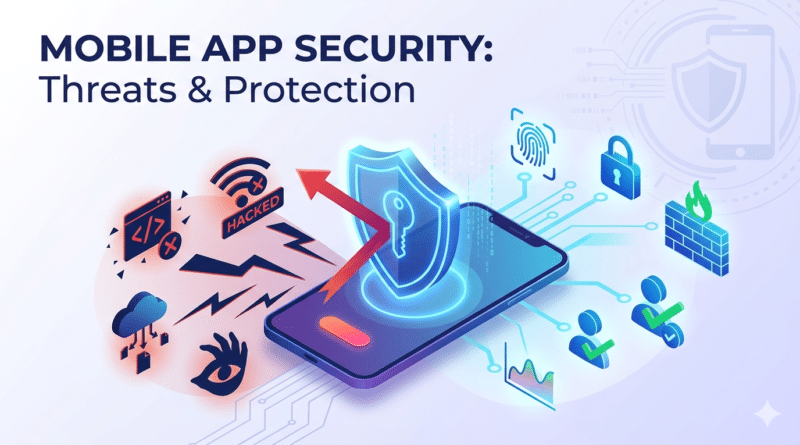
Corporate mobile apps are under constant assault from threats like app tampering, reverse engineering, malware, spyware, screen mirroring, app spoofing, and rooted/jailbroken devices.
To maintain digital trust, enterprises now require more than traditional security—they need AI-native, runtime-driven protection that evolves in real time.
What Are the Major Threats to Mobile Applications?
1. App Tampering & Reverse Engineering
Attackers modify app binaries to bypass controls or extract sensitive logic.
👉 Impact: Unauthorized access, IP theft
2. Malware & Spyware
Malicious apps intercept sensitive data such as credentials, OTPs, and financial information.
👉 Impact: Financial fraud, data compromise
3. App Spoofing & Phishing
Fake apps impersonate legitimate ones to trick users.
👉 Impact: Brand damage, user trust loss
4. Rooted & Jailbroken Devices
Compromised devices bypass OS-level protections.
👉 Impact: Increased vulnerability to attacks
5. Man-in-the-Middle (MitM) Attacks
Attackers intercept communication between app and backend systems.
👉 Impact: Data leakage
6. Screen Overlay & Mirroring Attacks
Malicious apps capture or manipulate screen activity.
👉 Impact: Credential theft, session hijacking
7. Insecure APIs & Backend Systems
Weak APIs expose sensitive business logic and data.
👉 Impact: Large-scale breaches
Why Traditional Mobile Security Falls Short
Legacy approaches like encryption and antivirus are no longer sufficient because:
- Apps operate in untrusted environments
- Attackers use automated reverse engineering tools
- Threats evolve faster than traditional defenses
👉 This is where AI-native runtime security becomes critical
Importance of AI-Native Runtime Security for Mobile Apps
AI-native runtime security represents the next evolution in mobile app protection. Unlike static or perimeter-based defenses, it operates inside the application during execution.
Why It Matters:
1. Real-Time Threat Detection
AI continuously monitors app behavior to detect anomalies instantly.
- Detects unknown (zero-day) threats
- Identifies suspicious patterns
2. Adaptive Security Mechanisms
AI models evolve based on new threat intelligence.
- Learns attacker techniques
- Automatically updates defenses
3. Context-Aware Protection
Security decisions are based on real-time context:
- Device health
- User behavior
- Network conditions
4. Autonomous Response
AI can take immediate action:
- Block malicious sessions
- Disable compromised features
- Alert security teams
5. Protection Against Advanced Attacks
AI-native systems can defend against:
- Advanced persistent threats (APTs)
- Automated bot attacks
- Behavioral anomalies
👉 In short, AI-native runtime security transforms mobile apps into self-defending systems
Mobile App Security Strategy: How to Mitigate Threats
1. Secure Development (Shift Left)
- SAST, DAST, VAPT
- Secure coding practices
2. Application Hardening
- Code obfuscation
- Anti-tampering & anti-debugging
3. Runtime Application Self-Protection (RASP)
- Real-time threat detection
- Prevents exploitation during execution
4. Device & Environment Risk Detection
- Detect rooted/jailbroken devices
- Block unsafe environments
5. Secure API & Communication
- Certificate pinning
- Strong encryption (TLS 1.3)
6. Data Protection
- Encryption at rest & in transit
- Secure key management
7. Continuous Monitoring with AI
- Behavioral analytics
- Threat intelligence integration
Best Mobile Application Security Solutions (Top 6)
1. Appdome
- No-code mobile security platform
- Offers RASP, anti-malware, anti-tampering
- Fast deployment for enterprises
2. Promon Shield
- Strong runtime protection
- Widely used in banking and fintech apps
3. Guardsquare (DexGuard / iXGuard)
- Advanced app hardening
- Protection against reverse engineering
4. Zimperium (zIPS)
- AI-driven mobile threat defense
- Detects device, network, and app threats
5. Veracode Mobile Security
- SAST & DAST capabilities
- Continuous security testing
6. Protect AI (AI-Native Security Platform)
- Focuses on securing AI-powered applications and models
- Detects vulnerabilities in AI/ML pipelines
- Ensures integrity of AI-driven mobile app components
- Helps mitigate risks from model manipulation and adversarial attacks
👉 Ideal for enterprises building AI-enabled mobile applications
Key Benefits of Strong Mobile App Security
- 🔒 Protect sensitive user data
- 🛡 Prevent fraud and cyberattacks
- 📉 Reduce breach risks
- 🤝 Build customer trust
- 📊 Ensure compliance
Future Trends in Mobile App Security
- AI-driven threat detection
- Zero Trust mobile architecture
- Behavioral biometrics
- AI security for mobile apps
- Integration with ZTNA
Conclusion
Mobile application threats are evolving rapidly, and traditional security is no longer enough. Enterprises must adopt a multi-layered, AI-native security approach that combines:
- Secure development
- App hardening
- Runtime protection
- AI-driven monitoring
By leveraging modern solutions and strategies, organizations can build resilient, self-protecting mobile applications and maintain long-term digital trust.