Cybersecurity Roadmap for Enterprises: Tools and Strategy (2026)
Cyber security is no longer optional — it is a business survival requirement.
With rising ransomware attacks, data breaches, phishing campaigns, and insider threats, organizations of all sizes must implement a structured cyber security roadmap to protect data, systems, and reputation.
However, many companies struggle with one key question:
👉 Where should we start and what security tools should we implement first?
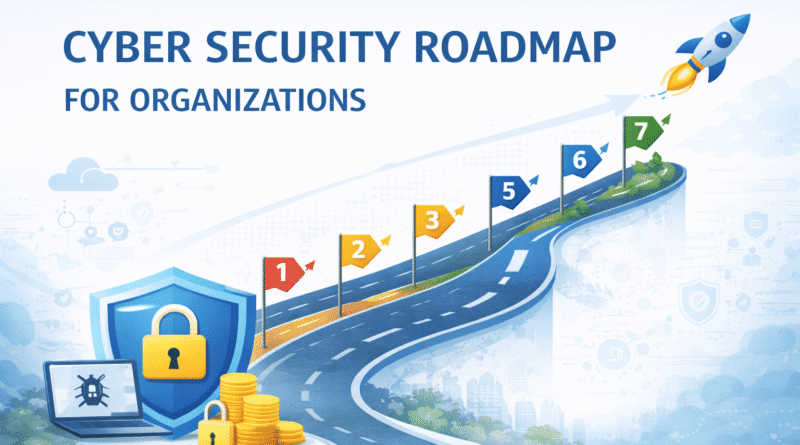
This article explains a phase-wise cyber security roadmap for organizations, including:
✔ Must-have security solutions
✔ Good-to-have advanced tools
✔ Step-by-step implementation plan
✔ Risks if security is not implemented
✔ What organizations achieve at each stage
This guide is designed for businesses planning a complete cyber security implementation strategy.
Why Organizations Need a Cyber Security Roadmap
Modern IT environments include cloud platforms, remote users, mobile devices, and third-party integrations. Without a structured security plan, organizations face:
- Financial loss due to cyber attacks
- Data theft and regulatory penalties
- Operational disruption
- Brand reputation damage
- Legal consequences
A cyber security roadmap ensures security is implemented in a planned, scalable, and cost-effective way.
Phase 1: Security Foundation (Must-Have for Every Organization)
This is the minimum cyber security baseline every organization must implement.
Essential Tools & Solutions
- Endpoint Protection / Antivirus (EDR preferred)
- Firewall (Next-Generation Firewall recommended)
- Multi-Factor Authentication (MFA)
- Secure Email Gateway / Anti-Phishing Protection
- Patch Management System
- Data Backup & Recovery (3-2-1 backup strategy)
What Organizations Achieve
✔ Protection from common malware and ransomware
✔ Unauthorized access prevention
✔ Reduced phishing risk
✔ Business continuity through backups
✔ Basic network protection
Risk If Not Implemented
❌ High risk of ransomware attacks
❌ Credential theft and account compromise
❌ Data loss without recovery
❌ Easy network intrusion
Impact: Most cyber attacks succeed due to missing basic security controls.
Phase 2: Visibility & Monitoring (Critical for Threat Detection)
Once basic protection is in place, organizations must gain security visibility.
Essential Tools
- Security Information and Event Management (SIEM)
- Log management and centralized monitoring
- Network monitoring tools
- Vulnerability scanning solutions
What Organizations Achieve
✔ Real-time threat detection
✔ Centralized security visibility
✔ Early attack identification
✔ Compliance reporting capability
Risk If Not Implemented
❌ Attacks remain undetected for months
❌ No forensic visibility
❌ Delayed response to breaches
❌ Compliance failures
Impact: Many companies discover breaches only after major damage occurs.
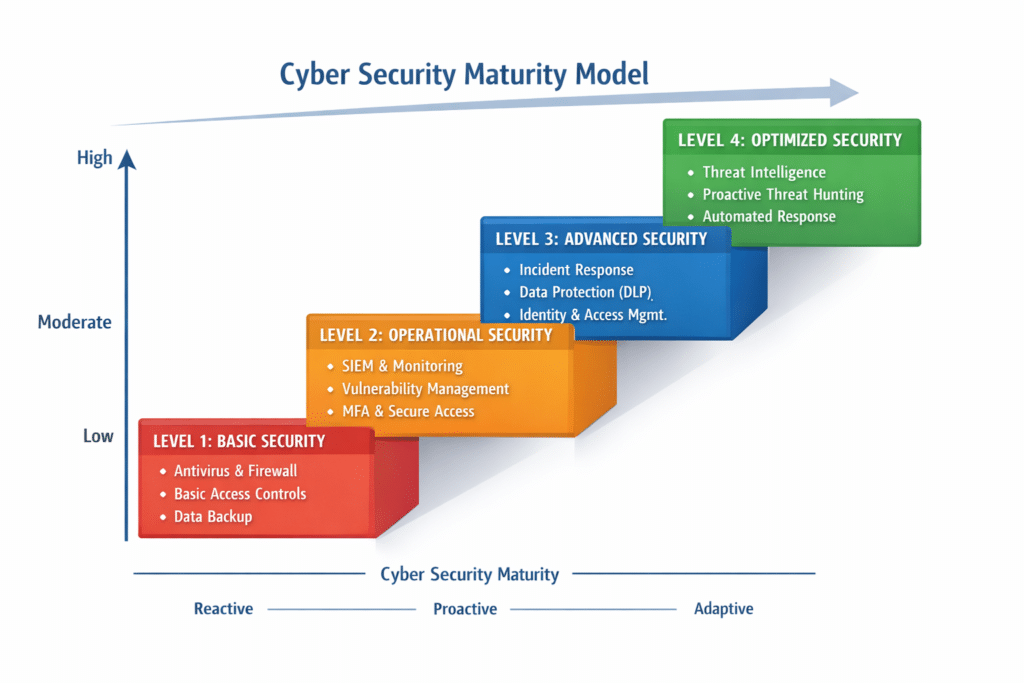
Phase 3: Access & Identity Security (Zero Trust Approach)
Identity is the new security perimeter, especially with remote work and cloud adoption.
Must-Have Solutions
- Identity & Access Management (IAM)
- Privileged Access Management (PAM)
- Single Sign-On (SSO)
- Zero Trust Network Access (ZTNA)
What Organizations Achieve
✔ Controlled user access
✔ Reduced insider threats
✔ Secure remote work environment
✔ Protection of privileged accounts
Risk If Not Implemented
❌ Unauthorized data access
❌ Privilege misuse
❌ Account takeover attacks
❌ Insider threat exposure
Impact: Identity compromise is the leading cause of breaches globally.
Phase 4: Data Protection & Compliance
Data is the most valuable asset — protecting it is essential.
Must-Have Solutions
- Data Loss Prevention (DLP)
- Encryption (data at rest and in transit)
- Cloud security tools (CASB / CSPM)
- Compliance monitoring tools
What Organizations Achieve
✔ Sensitive data protection
✔ Regulatory compliance (GDPR, HIPAA, etc.)
✔ Controlled data sharing
✔ Reduced data leakage risk
Risk If Not Implemented
❌ Data theft or leakage
❌ Legal penalties and fines
❌ Customer trust loss
❌ Intellectual property exposure
Impact: Data breaches can cost millions and permanently damage brand reputation.
Phase 5: Advanced Threat Protection (Good-to-Have but Highly Recommended)
This phase adds proactive security intelligence and automation.
Advanced Tools
- Extended Detection & Response (XDR)
- Threat Intelligence Platforms
- Security Orchestration, Automation & Response (SOAR)
- Managed Detection & Response (MDR)
What Organizations Achieve
✔ Faster incident response
✔ Automated threat containment
✔ Advanced attack detection
✔ Reduced security team workload
Risk If Not Implemented
❌ Slow response to advanced threats
❌ Manual incident handling delays
❌ Increased impact of cyber attacks
Impact: Attackers use automation — organizations must respond faster.
Phase 6: Security Awareness & Human Risk Management
Technology alone cannot prevent cyber attacks.
Essential Actions
- Employee cyber security training
- Phishing simulation programs
- Security awareness campaigns
What Organizations Achieve
✔ Reduced human error
✔ Strong security culture
✔ Fewer successful phishing attacks
Risk If Not Implemented
❌ Employees become attack entry points
❌ High phishing success rates
❌ Credential compromise
Impact: Human error causes over 80% of security incidents.
Phase 7: Continuous Improvement & Cyber Resilience
Cyber security is not a one-time project — it is an ongoing process.
Recommended Practices
- Regular penetration testing
- Security audits and risk assessments
- Incident response planning
- Business continuity testing
What Organizations Achieve
✔ Continuous risk reduction
✔ Faster recovery from incidents
✔ Mature security posture
Risk If Not Implemented
❌ Outdated defenses
❌ Weak incident response
❌ Increasing vulnerability over time
Must-Have vs Good-to-Have Cyber Security Solutions
Must-Have (Minimum Security)
- Firewall
- Endpoint security
- MFA
- Backup
- Email security
- SIEM / monitoring
- IAM
Good-to-Have (Advanced Security Maturity)
- XDR
- SOAR automation
- Threat intelligence
- Zero Trust architecture
- Continuous security validation
Final Cyber Security Roadmap Summary
- Build security foundation
- Gain monitoring visibility
- Secure identity and access
- Protect data and ensure compliance
- Implement advanced threat detection
- Train employees
- Continuously improve security posture
Organizations that follow this structured cyber security roadmap achieve:
✔ Strong defense against cyber attacks
✔ Regulatory compliance
✔ Reduced financial risk
✔ Improved operational resilience
✔ Customer trust and brand protection
Conclusion
Cyber threats are evolving rapidly, and organizations must adopt a phase-wise cyber security implementation strategy rather than random tool deployment.
A well-planned cyber security roadmap helps businesses:
- Prioritize investments
- Reduce risk step-by-step
- Achieve measurable security maturity
In today’s digital economy, cyber security is not just IT protection — it is business protection.