
Google Maps Gets a Major AI Upgrade with “Ask Maps” and Immersive Navigation
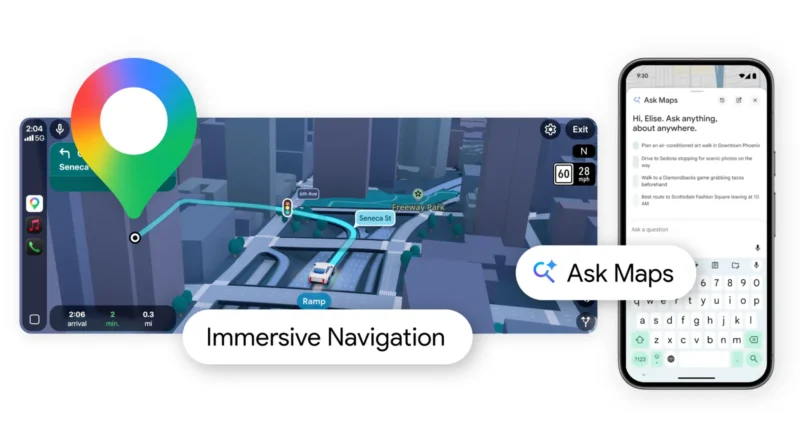
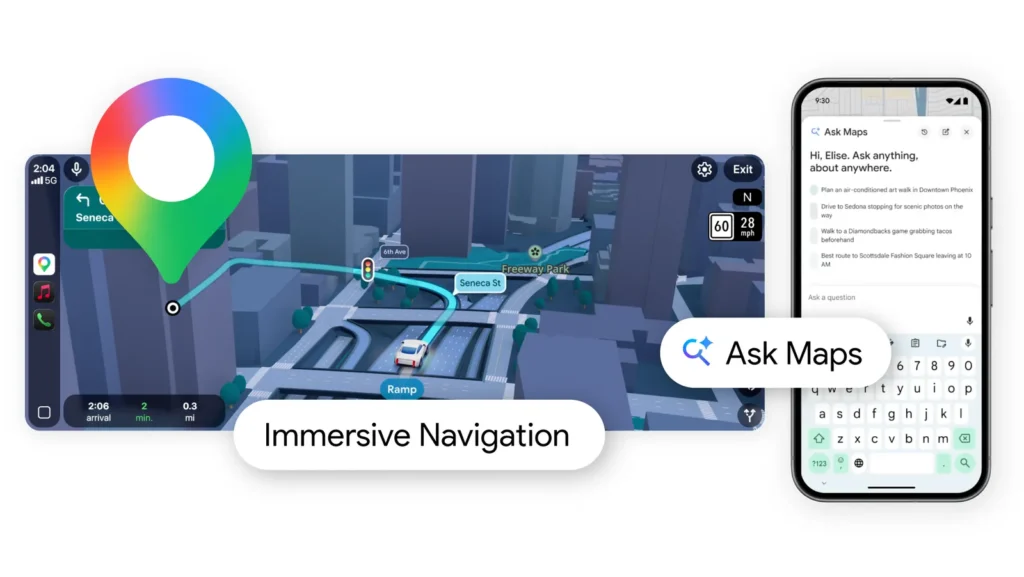
Google Maps is undergoing one of its biggest transformations in more than a decade. Google has introduced two powerful new features — Ask Maps and Immersive Navigation — powered by its Gemini AI technology. These features aim to make navigation smarter, more conversational, and visually intuitive.
Instead of simply typing a location and following directions, users will soon be able to interact with Google Maps in a more natural way and see navigation guidance in a highly detailed 3D environment.
This update represents Google’s push to integrate artificial intelligence into everyday apps, turning Maps into a more intelligent travel companion that can help users discover places, plan trips, and navigate cities more easily.
What is Ask Maps?
Ask Maps is a new AI-powered conversational feature inside Google Maps. It allows users to ask natural-language questions instead of manually searching for places.
For example, instead of searching for restaurants one by one, you could ask:
- “Find a quiet coffee shop with Wi-Fi nearby”
- “Plan a road trip route with scenic stops”
- “Show highly rated vegetarian restaurants around me”
The system uses Google’s Gemini AI model along with data from over 300 million places and hundreds of millions of user reviews to generate contextual answers and suggestions.
Ask Maps also learns from user activity within Google Maps to provide more personalized recommendations.
For example, if you usually search for vegan restaurants, the system may prioritize plant-based dining options in future suggestions.
How Immersive Navigation Changes Google Maps
The second major update is Immersive Navigation, a redesigned navigation experience that introduces realistic 3D visuals while driving or walking.
Instead of traditional map arrows, users can see:
- 3D representations of buildings and landmarks
- Road medians, traffic lights, and crosswalks
- Detailed terrain and surrounding structures
- Lane-level guidance for turns and merges
The system dynamically adjusts the view to show upcoming turns and important road features, helping drivers understand exactly what lies ahead.
Another useful feature is contextual route explanations. Google Maps can now explain why a particular route is recommended and show alternative options based on traffic conditions or reported incidents.
Additionally, the system can help users locate parking areas near their destination and provide walking directions if needed.
Availability of Ask Maps
The rollout of Ask Maps has already begun but is currently limited to specific regions.
Current availability:
- United States
- India
The feature is rolling out first on Android and iOS mobile devices, with desktop support expected to arrive later.
Because this is a phased rollout, not every user in these countries may see the feature immediately. Google typically releases major updates gradually to ensure stability and gather feedback before expanding globally.
Availability of Immersive Navigation
Immersive Navigation is launching slightly differently from Ask Maps.
Initial rollout:
- United States (first phase)
It will work on:
- Android phones
- iPhones
- Apple CarPlay
- Android Auto
- Vehicles with built-in Google systems
Google has confirmed that the feature will expand to more regions over the coming months as the company refines the experience and collects user feedback.
Expected Global Rollout Timeline
Google has not provided a precise global rollout date yet, but based on its announcement:
- Early rollout began in March 2026
- Expansion to more countries is expected throughout 2026
- Desktop versions of Ask Maps are also planned soon
Historically, Google Maps features roll out gradually across regions depending on data availability, infrastructure readiness, and localization requirements.
Countries with strong Google Maps infrastructure, including many European and Asian markets, are likely to receive the update sooner.
Why This Update Is Important
This upgrade marks a major shift in how users interact with navigation apps.
Traditional navigation tools rely mostly on search and route calculation. With AI integration, Google Maps is evolving into a smart assistant that understands context, preferences, and travel goals.
The combination of conversational search and immersive navigation could make trip planning and navigation far more intuitive.
Key improvements include:
- Natural language search instead of manual filters
- Personalized recommendations based on user preferences
- Realistic 3D navigation visuals
- Better route explanations and parking guidance
- Smarter trip planning capabilities
The Future of AI-Powered Navigation
With Gemini AI now integrated into Google Maps, the app is moving beyond simple navigation toward becoming a full travel assistant.
Future improvements may include:
- Voice-based conversational navigation
- AI-generated travel itineraries
- Integration with events, reservations, and bookings
- Smarter local discovery based on lifestyle preferences
As AI continues to evolve, navigation apps are expected to become more proactive — suggesting destinations, helping plan trips, and guiding users in a more human-like way.
Final Thoughts
The introduction of Ask Maps and Immersive Navigation is one of the most significant upgrades to Google Maps in years. By combining AI-powered recommendations with realistic navigation visuals, Google is redefining how people explore cities and plan their journeys.
While the rollout is currently limited to the United States and India for Ask Maps and primarily the United States for Immersive Navigation, a wider global expansion is expected over the coming months.
For users who rely on Google Maps daily, these features could soon make navigation faster, smarter, and far more interactive.