
Cybersecurity Maturity Assessment: How to Evaluate Your Organization’s Security Posture
Cybersecurity has become a business priority for organizations of every size. From ransomware and phishing attacks to cloud misconfigurations, data breaches, identity compromise, and AI-related risks, businesses are facing an increasingly complex threat landscape.
Many organizations invest in cybersecurity tools over time. They deploy firewalls, endpoint protection, antivirus, email security, multi-factor authentication, and other solutions. However, an important question often remains unanswered:
How mature is your organization’s overall cybersecurity posture?
Having multiple security tools does not automatically mean an organization is well protected. Security controls may be poorly configured, disconnected from each other, or missing entirely in important areas.
This is where a cybersecurity maturity assessment becomes useful.
A structured assessment helps an organization understand its current security capabilities, identify potential gaps, prioritize areas for improvement, and build a roadmap for strengthening its overall cybersecurity posture.
In this article, we explain what a cybersecurity maturity assessment is, how it works, what areas should be evaluated, and how organizations can use the results to improve their security strategy.
What Is a Cybersecurity Maturity Assessment?
A cybersecurity maturity assessment is a structured evaluation of how effectively an organization manages cybersecurity across technology, processes, people, governance, and risk.
The purpose is not simply to check whether a company has purchased specific security products. Instead, the assessment looks at whether appropriate controls are implemented, managed, monitored, and continuously improved.
A typical assessment may evaluate areas such as:
- Asset visibility and IT management
- Network security
- Endpoint protection
- Identity and access management
- Email security
- Data protection and Data Loss Prevention
- Vulnerability management
- Security monitoring and incident response
- Cloud security
- Application and API security
- Container and Kubernetes security
- OT and ICS security
- AI security and AI data protection
- Security awareness and governance
The exact areas should depend on the organization’s environment. For example, a company that does not operate industrial systems may not need an extensive OT security assessment, while an organization using cloud infrastructure and generative AI should consider cloud and AI-related risks.
Why Is Cybersecurity Maturity Important?
Cybersecurity maturity provides a broader view of security readiness.
An organization might have a strong firewall but weak identity controls. Another might have good endpoint protection but limited visibility into sensitive data stored across cloud applications.
Cyberattacks often succeed by exploiting these gaps.
A maturity assessment helps organizations move away from isolated security decisions and instead look at cybersecurity as an interconnected strategy.
Some of the key benefits include:
Identify Security Gaps
An assessment can reveal areas where appropriate security controls are missing, incomplete, or inconsistently implemented.
Prioritize Cybersecurity Investments
Not every security gap needs to be addressed immediately. A maturity assessment can help organizations prioritize critical risks and make better investment decisions.
Improve Risk Visibility
Business and technology leaders can gain a clearer view of their current security posture and understand where risks may exist.
Build a Cybersecurity Roadmap
The results can be used to develop short-term, medium-term, and long-term security improvement plans.
Support Business and Compliance Requirements
A structured security assessment can also support discussions around customer requirements, regulatory obligations, internal governance, and risk management.
How to Evaluate Your Organization’s Cybersecurity Posture
A meaningful cybersecurity assessment should begin with understanding the organization’s environment.
1. Identify Your Digital Assets
The first step is understanding what needs to be protected.
Organizations should have visibility into:
- User devices and endpoints
- Servers and workloads
- Network infrastructure
- Applications
- Cloud resources
- SaaS platforms
- Databases
- Sensitive data
- APIs
- OT or industrial assets where applicable
Without proper visibility, security teams may struggle to protect unknown or unmanaged assets.
2. Assess Network Security
Organizations should evaluate how their networks are protected from unauthorized access and malicious activity.
Important considerations include:
- Firewall protection
- Network segmentation
- Secure remote access
- VPN and ZTNA controls
- SASE architecture
- Network monitoring
- Intrusion detection and prevention
3. Review Endpoint Protection
Endpoints remain a major attack surface.
A cybersecurity posture assessment should consider whether the organization has adequate controls for:
- Endpoint protection
- EDR or XDR
- Patch management
- Device visibility
- Ransomware protection
- Threat detection and response
4. Evaluate Identity and Access Security
Identity compromise is a common path used by attackers.
Organizations should review:
- Multi-Factor Authentication
- Identity and Access Management
- Privileged Access Management
- Single Sign-On
- Least privilege access
- Privileged account monitoring
- Conditional access policies
5. Assess Email Security
Phishing and Business Email Compromise continue to create significant risks for businesses.
An effective email security strategy may include:
- Advanced phishing protection
- Malware detection
- URL analysis
- Attachment sandboxing
- Business Email Compromise protection
- Email authentication
- Security awareness training
6. Review Data Security
Organizations should understand what sensitive information they hold and where that information is located.
Key data security considerations include:
- Data discovery
- Data classification
- Data access monitoring
- Data Loss Prevention
- Data Security Posture Management
- Database security
- Cloud data protection
7. Evaluate Cloud Security
As organizations adopt public cloud and SaaS platforms, cloud security becomes increasingly important.
Areas to evaluate include:
- Cloud misconfigurations
- Excessive permissions
- Cloud workload security
- Identity management
- Multi-cloud visibility
- CSPM
- Cloud entitlement management
8. Assess Application and API Security
Internet-facing applications and APIs can introduce significant risks.
Organizations should consider:
- Vulnerability Assessment and Penetration Testing
- Secure development practices
- SAST
- DAST
- Software Composition Analysis
- Web Application Firewall
- API discovery
- API security monitoring
9. Review AI Security Risks
The rapid adoption of generative AI has created new security and data protection challenges.
Organizations should evaluate:
- Visibility into AI application usage
- Shadow AI
- Sensitive data shared with AI applications
- AI Data Loss Prevention
- AI governance
- User access controls
- AI-related security policies
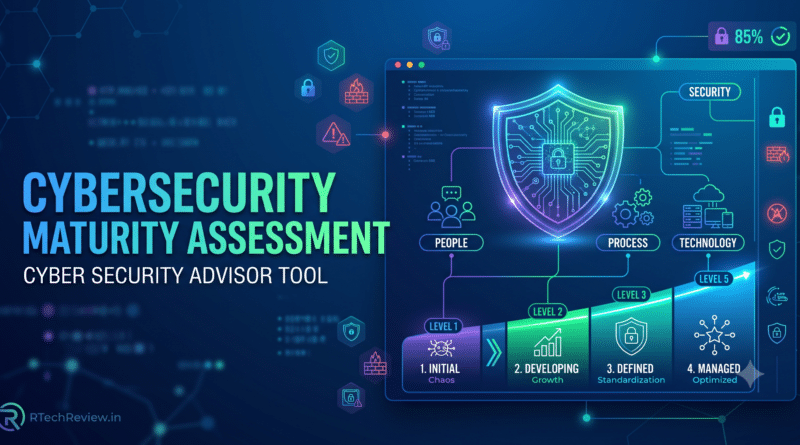
The Four Levels of Cybersecurity Maturity
While different maturity frameworks use different models, cybersecurity maturity can generally be viewed across four broad levels.
Level 1: Initial
Security practices are limited or reactive.
The organization may have significant gaps in visibility, protection, monitoring, or incident response.
Focus: Establish fundamental cybersecurity controls.
Level 2: Developing
The organization has started implementing important security technologies and processes but may have inconsistent coverage or gaps.
Focus: Improve security coverage and consistency.
Level 3: Managed
Security controls and processes are more structured and consistently managed.
The organization has better visibility, defined responsibilities, and established security practices.
Focus: Improve integration, automation, and continuous monitoring.
Level 4: Optimized
Cybersecurity is integrated into the organization’s overall strategy and continuously improved.
The organization uses proactive security practices, automation, monitoring, and risk-based decision-making.
Focus: Continuously adapt to emerging threats and business changes.
Common Cybersecurity Gaps Found in Organizations
During cybersecurity assessments, organizations frequently identify gaps such as:
- Incomplete asset inventories
- Unpatched systems
- Lack of Multi-Factor Authentication
- Excessive user privileges
- Weak privileged account management
- Limited visibility into sensitive data
- Absence of DLP controls
- Insufficient phishing protection
- Poor cloud configuration management
- Lack of centralized security monitoring
- Limited incident response planning
- Unsecured APIs
- Shadow IT and Shadow AI
- Inadequate ransomware recovery planning
The presence of one or more of these gaps does not necessarily mean an organization has been compromised. However, they may increase the overall risk exposure and should be evaluated based on business impact and likelihood.
How to Use the Results of a Cybersecurity Assessment
The value of an assessment comes from the actions taken afterward.
Organizations can use their results to create a prioritized roadmap.
Immediate Actions: 0–30 Days
Focus on critical security gaps, such as:
- Enabling MFA
- Addressing critical vulnerabilities
- Improving endpoint protection
- Reviewing privileged accounts
- Strengthening email security
- Identifying sensitive data
Medium-Term Actions: 30–90 Days
Organizations may focus on:
- Improving centralized visibility
- Implementing DLP
- Enhancing cloud security
- Improving vulnerability management
- Strengthening incident response processes
- Conducting security awareness training
Long-Term Improvements
Long-term initiatives may include:
- Security architecture modernization
- Zero Trust adoption
- Security automation
- SIEM and SOC improvements
- Advanced cloud security
- API security
- AI security governance
- Continuous security assessments
Try Our Free Cybersecurity Maturity Assessment
Understanding your current cybersecurity posture is the first step toward improving it.
We have created a free interactive tool that helps organizations answer focused questions about their technology environment and current security controls.
Based on the information provided, the Cyber Security Advisor offers an indicative view of:
- Overall cybersecurity maturity
- Potential risk level
- Security gaps
- Domain-wise observations
- Priority areas
- Recommended improvements
- Short-term and long-term action areas
Take the assessment here:
👉 Try the Free Cybersecurity Maturity Assessment
The assessment is intended as a starting point and does not replace a detailed technical security audit, penetration test, vulnerability assessment, or compliance assessment.
How Often Should You Perform a Cybersecurity Maturity Assessment?
Cybersecurity is not static.
Organizations should review their cybersecurity posture regularly and particularly after significant changes, such as:
- Moving workloads to the cloud
- Deploying new business applications
- Acquiring or merging with another company
- Expanding remote work
- Experiencing a security incident
- Adopting generative AI
- Implementing major infrastructure changes
- Changing regulatory or compliance requirements
Regular assessments help ensure that security controls continue to align with the organization’s changing technology environment and risk profile.
Final Thoughts
A cybersecurity maturity assessment provides organizations with a structured way to understand where they stand today and where they need to improve.
The goal is not necessarily to deploy every available cybersecurity product. Instead, organizations should identify their most important assets, understand their risks, evaluate existing controls, and prioritize improvements based on their business requirements.
A mature cybersecurity program combines technology, people, processes, visibility, and continuous improvement.
The first step is understanding your current position.
Start by assessing your organization’s cybersecurity posture and use the results to build a practical roadmap for improvement.