Email Security Solutions: Protecting Enterprises from Phishing and Malware
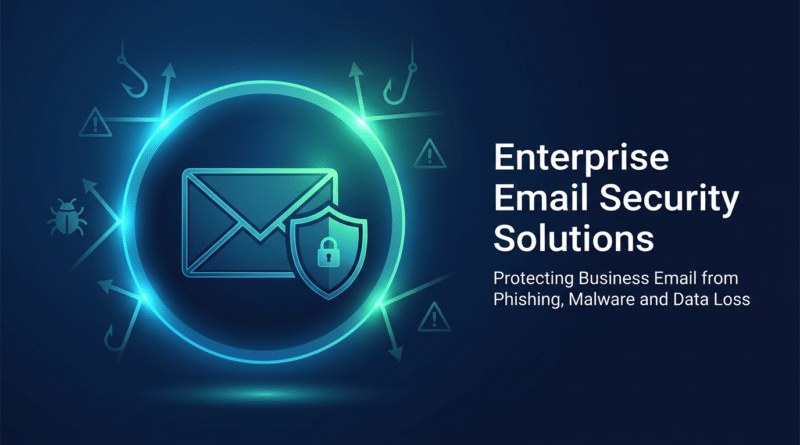
Email Security Solutions: Protecting Enterprises from Phishing, Malware and Business Email Attacks
Email continues to be one of the most widely used communication channels in modern enterprises. However, it is also one of the most common entry points for cyberattacks. Threat actors frequently exploit email systems to deliver phishing attacks, malware, ransomware, and business email compromise (BEC) scams.
According to several cybersecurity studies, a large percentage of cyber incidents begin with malicious emails. As organizations rely heavily on digital communication, implementing strong email security solutions has become a critical part of enterprise cybersecurity strategies.
Modern email security platforms use advanced technologies such as artificial intelligence, threat intelligence, and behavioral analysis to detect malicious messages before they reach users. These solutions help organizations reduce risks associated with phishing attacks, credential theft, and data breaches.
Why Email Security is Critical for Enterprises
Email is deeply integrated into enterprise workflows, including communication with customers, partners, and employees. Because of this, attackers frequently target email systems to exploit human behavior and bypass traditional security controls.
Without proper email security measures, organizations may face:
- Phishing attacks targeting employee credentials
- Malware or ransomware delivered through attachments
- Business Email Compromise (BEC) fraud
- Data leaks through malicious email links
- Unauthorized access to corporate email accounts
Implementing enterprise email security helps organizations detect and block malicious messages, preventing cyber threats from entering the corporate network.
Email protection also plays a significant role in a broader enterprise cybersecurity strategy. As part of a comprehensive cybersecurity roadmap for enterprises, organizations must implement layered defenses to protect communication channels and sensitive information.
(Here you can link the phrase cybersecurity roadmap for enterprises to your pillar article.)
Common Email Security Threats
Understanding the most common email-based attacks helps organizations implement effective protection mechanisms.
Phishing Attacks
Phishing attacks trick users into revealing sensitive information such as login credentials, financial data, or personal details. Attackers often disguise emails as legitimate messages from banks, colleagues, or service providers.
Advanced phishing campaigns may use carefully crafted emails that closely resemble legitimate communications, making them difficult to detect.
Business Email Compromise (BEC)
Business Email Compromise attacks target employees in finance or executive roles. Attackers impersonate senior executives or trusted vendors to trick employees into transferring funds or sharing sensitive information.
BEC attacks can cause significant financial losses for organizations.
Malware and Ransomware Attachments
Malicious email attachments are a common method used to distribute malware. These attachments may appear as invoices, reports, or documents but contain hidden malicious code.
Once opened, they may install malware that can steal data, spy on user activity, or encrypt files for ransom.
Email Spoofing
Email spoofing occurs when attackers forge the sender’s address to make the message appear as if it came from a trusted source. Spoofed emails are commonly used in phishing and fraud campaigns.
Authentication protocols such as SPF, DKIM, and DMARC help detect and prevent spoofed emails.
Key Components of Enterprise Email Security Solutions
Modern email security platforms include several technologies designed to detect and block malicious email activity.
Secure Email Gateways
Secure Email Gateways (SEG) act as a protective layer between the internet and the organization’s email server. They scan incoming and outgoing emails for malicious content, spam, and suspicious attachments.
These gateways filter threats before emails reach the user inbox.
Advanced Phishing Detection
Modern email security solutions use artificial intelligence and machine learning to detect phishing attempts. These systems analyze message patterns, sender reputation, and suspicious links to identify malicious emails.
Advanced phishing detection can identify attacks that bypass traditional spam filters.
Attachment Sandboxing
Attachment sandboxing allows suspicious files to be opened in a secure virtual environment before reaching the user. If the file contains malicious code, it is detected and blocked.
This technique helps prevent malware infections.
URL Protection
Attackers often embed malicious links in phishing emails. URL protection tools analyze links in real time and block access to malicious websites.
Some systems rewrite links in emails and scan them when the user clicks them.
Email Authentication Protocols
Email authentication technologies help verify the legitimacy of email senders.
Key protocols include:
- SPF (Sender Policy Framework) – verifies sending servers
- DKIM (DomainKeys Identified Mail) – ensures message integrity
- DMARC (Domain-based Message Authentication Reporting and Conformance) – protects against domain spoofing
These technologies help prevent attackers from impersonating trusted domains.
How Modern Email Security Solutions Work
Enterprise email security platforms combine multiple detection techniques to identify threats.
These include:
Threat Intelligence
Security platforms analyze threat intelligence feeds containing information about known malicious domains, IP addresses, and phishing campaigns.
Behavioral Analysis
Behavioral analytics helps identify suspicious email patterns, such as unusual sender behavior or abnormal login activity.
Artificial Intelligence Detection
AI-based systems analyze millions of email patterns to identify anomalies and detect new attack techniques.
This allows organizations to detect sophisticated phishing campaigns that may bypass traditional filters.
Email Security Best Practices for Enterprises
In addition to deploying security tools, organizations should implement strong security practices to reduce risks.
Employee Security Awareness Training
Employees should be trained to identify phishing emails and suspicious attachments.
Multi-Factor Authentication
Multi-factor authentication helps protect email accounts even if login credentials are stolen.
Regular Email Security Audits
Organizations should periodically review email security policies and update protection mechanisms.
Monitoring Suspicious Activity
Security teams should monitor unusual email login behavior, suspicious attachments, and abnormal message activity.
Email Security as Part of a Modern Cybersecurity Strategy
Email security should not be implemented as a standalone tool. It must be integrated into a broader cybersecurity architecture.
Organizations often combine email security with other security technologies such as:
- Endpoint detection and response (EDR)
- Identity and access management
- Attack surface management
- Zero Trust security models
By integrating these solutions, enterprises can create a layered defense system that reduces the risk of cyberattacks.
Conclusion
Email remains one of the most significant attack vectors used by cybercriminals. Phishing campaigns, malware attachments, and business email compromise attacks continue to target enterprise communication systems.
Implementing modern email security solutions helps organizations detect and block malicious messages before they reach employees. Combined with employee awareness training, authentication protocols, and advanced threat detection technologies, email security plays a critical role in protecting enterprise infrastructure.
As cyber threats continue to evolve, enterprises must adopt proactive email security strategies to safeguard sensitive information and maintain operational resilience.