Zero Trust Network Security (ZTNA): Architecture, Use Cases & VPN Replacement Explained
In today’s hybrid world—where employees work from home, applications live in the cloud, and attackers are more sophisticated than ever—traditional perimeter-based security no longer works. This is where Zero Trust Network Security, commonly implemented through Zero Trust Network Access (ZTNA), becomes essential.
This blog explains what ZTNA is, why organizations need it, how it replaces VPN, real-world use cases, and ZTNA architecture, in simple yet technical terms.
What Is Zero Trust Network Security?
Zero Trust Network Security is a cybersecurity model based on one core principle:
“Never trust, always verify.”
Unlike traditional security models that assume everything inside the network is safe, Zero Trust assumes breach by default and continuously verifies users, devices, applications, and network behavior before granting access.
ZTNA is the network access implementation of Zero Trust that provides secure, identity-aware, application-level access—without exposing the internal network.
What Is ZTNA (Zero Trust Network Access)?
ZTNA is a modern alternative to VPN that provides secure access to specific applications, not the entire network.
Key Characteristics of ZTNA
- Identity-based access (user + device)
- Least-privilege connectivity
- Application-level access
- Continuous authentication & authorization
- No direct network exposure

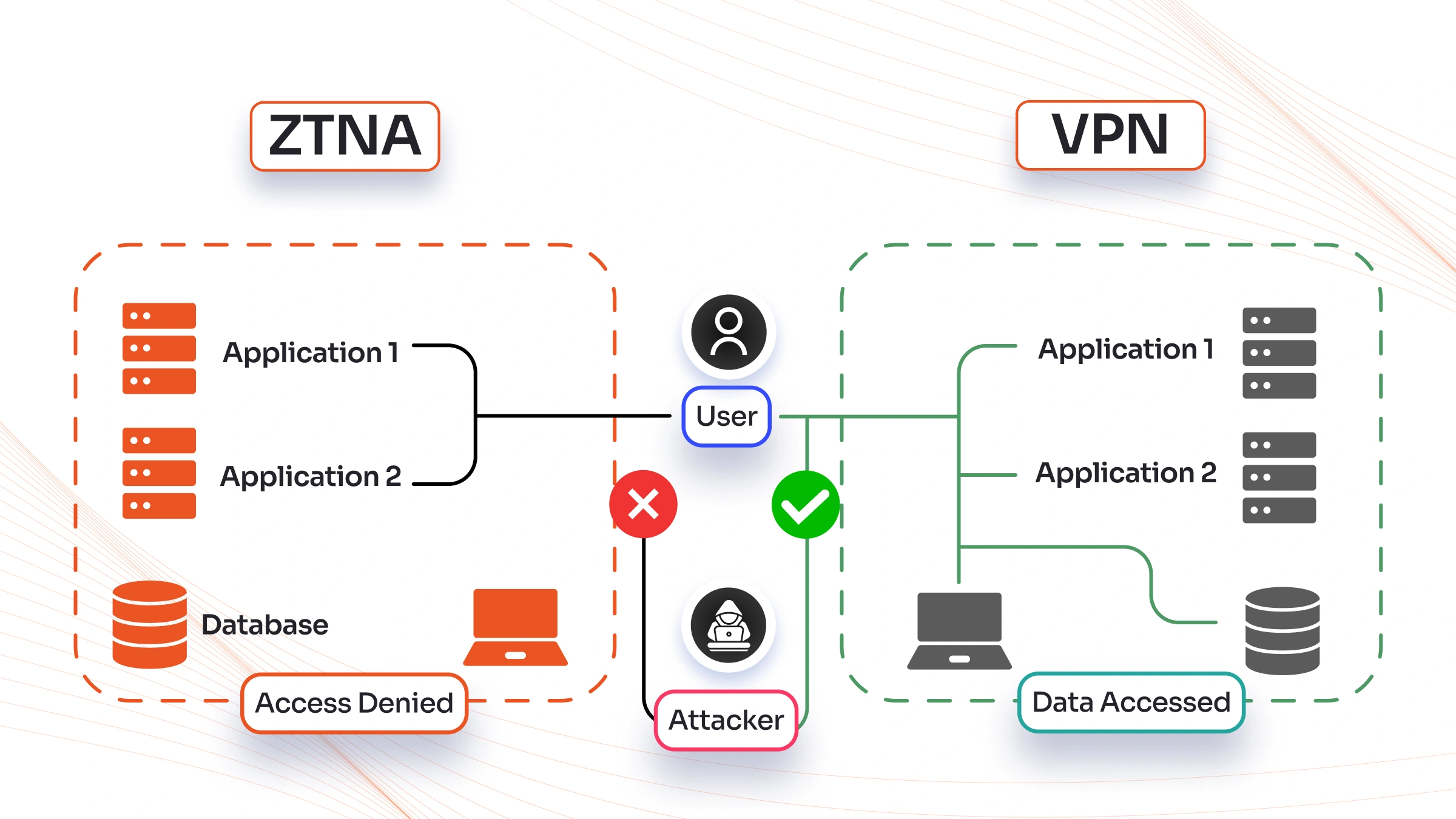
In simple terms:
- VPN: Connects users to the network
- ZTNA: Connects users to applications
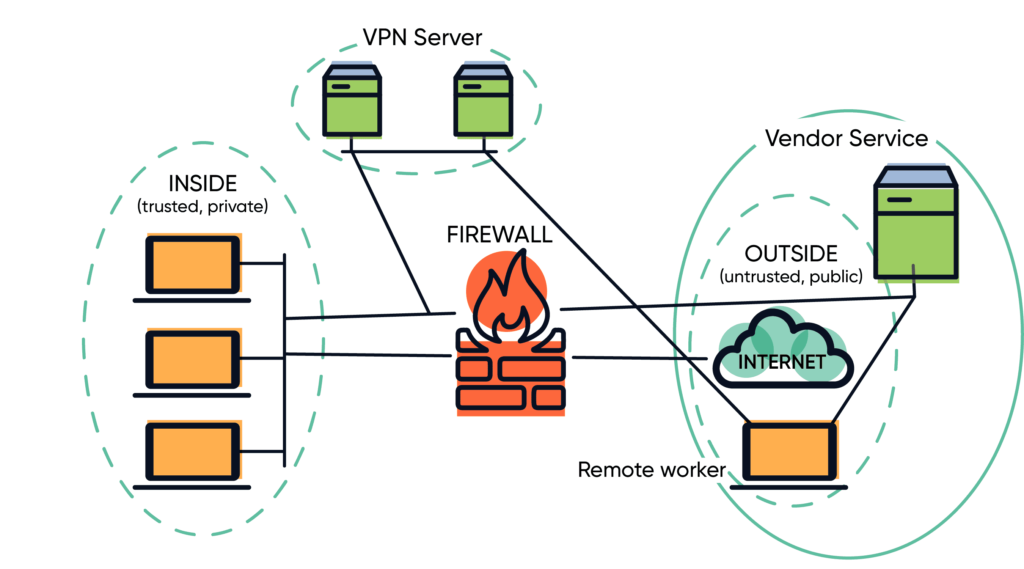
Why Traditional VPN Is No Longer Enough
VPNs were designed for a time when:
- Applications were inside data centers
- Users were mostly on corporate networks
- Threats were less advanced
VPN Limitations
- Broad network access (once connected, user can move laterally)
- No continuous verification
- Poor performance for cloud/SaaS apps
- High risk if credentials are compromised
- Difficult to scale for hybrid workforces
This makes VPNs a high-value target for attackers.
How ZTNA Replaces VPN
ZTNA does not extend the network to users. Instead, it brokers access based on identity and context.
| Feature | VPN | ZTNA |
|---|---|---|
| Access scope | Network-level | Application-level |
| Trust model | Implicit | Zero Trust |
| Lateral movement | Possible | Prevented |
| Cloud-friendly | Limited | Native |
| User experience | Heavy client | Lightweight / agentless |
ZTNA ensures users never see the internal network, dramatically reducing the attack surface.
ZTNA Architecture Explained
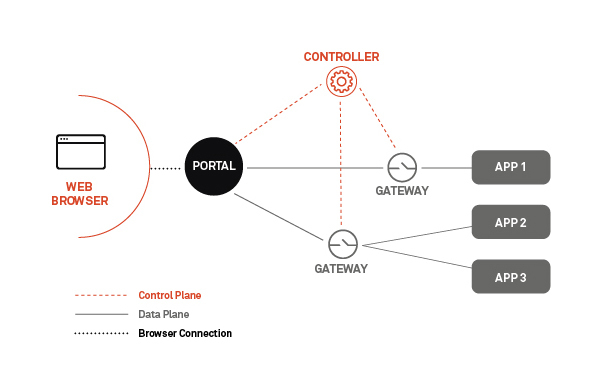
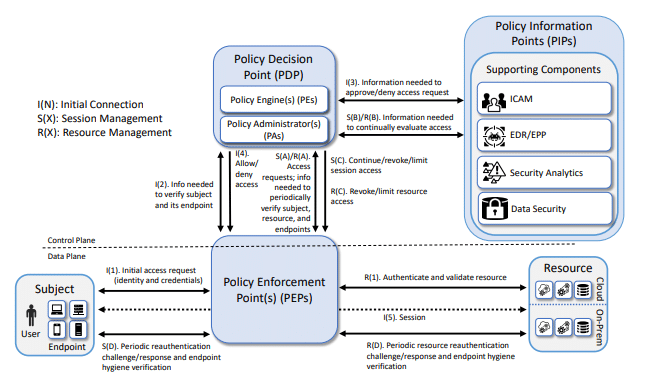
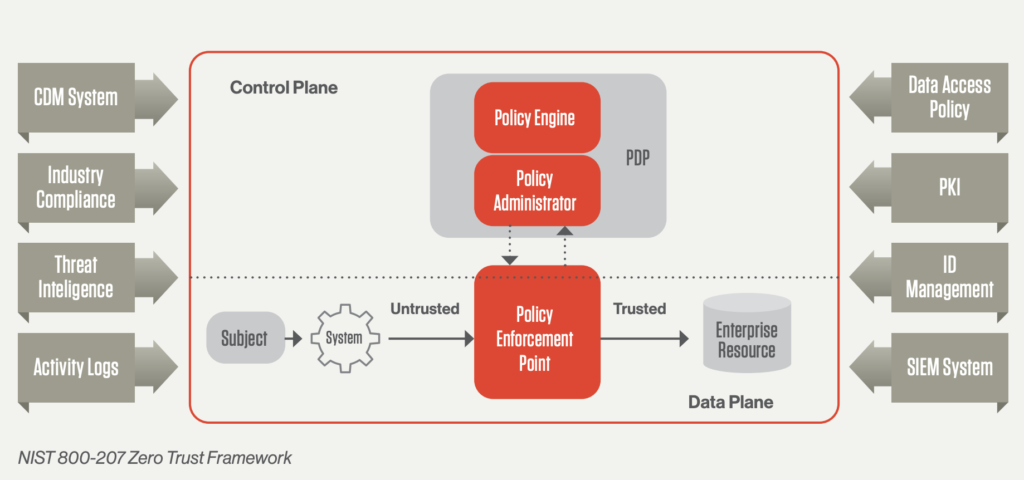
ZTNA architecture is built around identity, context, and policy enforcement.
Core Components of ZTNA Architecture
1. Identity Provider (IdP)
- Authenticates users (SSO, MFA)
- Integrates with IAM solutions
2. Device Posture Check
- Verifies device health
- OS version, patch level, EDR status
3. ZTNA Controller / Broker
- Makes access decisions
- Enforces security policies
4. Policy Engine
- Defines who can access what, from where, and under which conditions
5. Application Connector
- Sits close to the application
- No inbound ports exposed to the internet
Who Needs ZTNA?
ZTNA is not just for large enterprises—it’s increasingly essential for organizations of all sizes.
Organizations That Benefit Most
- Enterprises with remote or hybrid workforce
- Companies using cloud & SaaS applications
- BFSI, Fintech, Healthcare, Government sectors
- Organizations handling sensitive or regulated data
- Companies modernizing legacy VPN infrastructure
Key Use Cases of ZTNA
1. Secure Remote Workforce Access
Employees securely access internal and cloud apps without VPN.
2. Third-Party & Vendor Access
Grant limited, time-bound access without exposing the network.
3. Cloud & Hybrid Application Security
Protect applications hosted across AWS, Azure, GCP, and on-prem.
4. BYOD Security
Access granted based on device posture, not just credentials.
5. M&A and Temporary Workforce
Quickly onboard/offboard users without complex network changes.
ZTNA and Zero Trust: How They Work Together
ZTNA is a foundational pillar of the Zero Trust framework, along with:
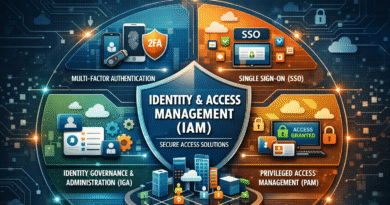
- Identity & Access Management (IAM)
- Endpoint Security
- Continuous Monitoring
- Data Security
- Network Segmentation
ZTNA enforces Zero Trust at the network access layer, ensuring least-privilege connectivity.
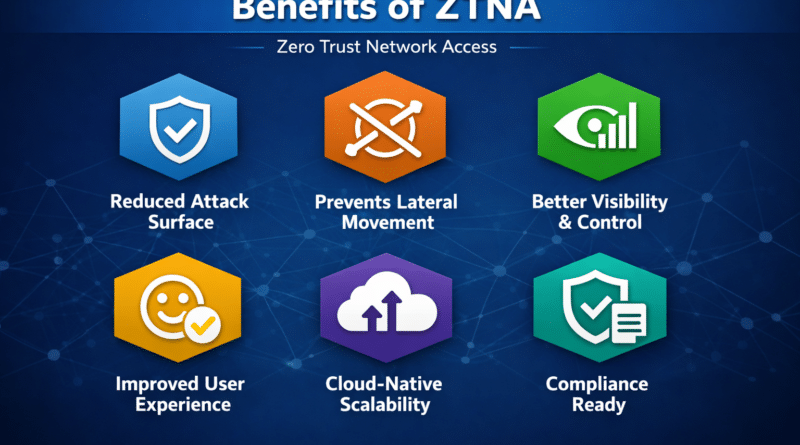
Benefits of Implementing ZTNA
- Reduced attack surface
- Elimination of lateral movement
- Better visibility and control
- Improved user experience
- Cloud-native scalability
- Compliance-ready architecture
ZTNA vs Traditional Network Security: A Shift in Mindset
Traditional security focuses on protecting the perimeter.
Zero Trust and ZTNA focus on protecting access.
This shift is critical in an era where:
- The perimeter is gone
- Identities are the new firewall
- Applications live everywhere
Best Practices for ZTNA Implementation
- Start with critical applications
- Integrate with strong identity providers
- Enforce MFA everywhere
- Define granular access policies
- Monitor continuously and adapt policies
- Replace VPN gradually, not overnight
Final Thoughts
ZTNA is no longer a “nice-to-have”—it’s a strategic requirement for modern organizations. As cyber threats evolve and workplaces become more distributed, Zero Trust Network Security provides a secure, scalable, and future-ready approach to access control.
Replacing VPN with ZTNA is not just a technology upgrade—it’s a security transformation.