
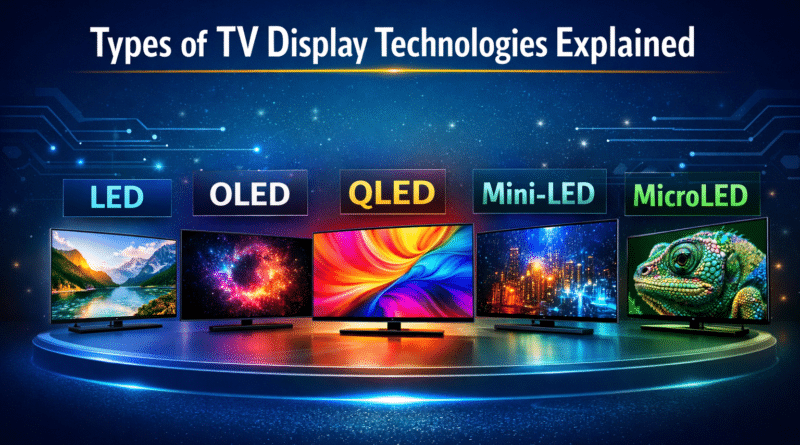
Types of TV Display Technologies Explained: LED, OLED, QLED, Mini-LED & MicroLED (2026 Guide)
Choosing a Smart TV today is no longer just about screen size or brand. Display technology plays the biggest role in picture quality, longevity, power consumption, and price. With terms like LED, OLED, QLED, Mini-LED, and MicroLED being used heavily in marketing, it’s easy to get confused.
This guide explains how each TV display technology works, their real-world pros and cons, and which type is best for different users in 2026.
Why TV Display Technology Matters
The display panel determines:
- Brightness & contrast
- Black levels & color accuracy
- Viewing angles
- Power efficiency
- Risk of burn-in
- Overall lifespan of the TV
Understanding the technology helps you avoid overpaying and choose the right TV for your usage.
1️⃣ LED TV (LED-LCD) – The Most Common Technology
What is an LED TV?
An LED TV is essentially an LCD TV that uses LED backlighting instead of older CCFL lamps. The picture itself is produced by LCD pixels, while LEDs provide illumination.
Types of LED Backlighting
- Edge-Lit LED – LEDs placed around the edges (cheaper, thinner)
- Full-Array LED (FALD) – LEDs behind the screen (better contrast)
Pros
✔ Affordable
✔ Wide availability in all sizes
✔ No burn-in risk
✔ Good brightness for well-lit rooms
Cons
✖ Limited black levels
✖ Blooming around bright objects
✖ Average contrast compared to OLED
Best for:
- Budget buyers
- Daily TV viewing
- News, cable TV, casual streaming
2️⃣ OLED TV – Perfect Blacks & Premium Quality
What is OLED?
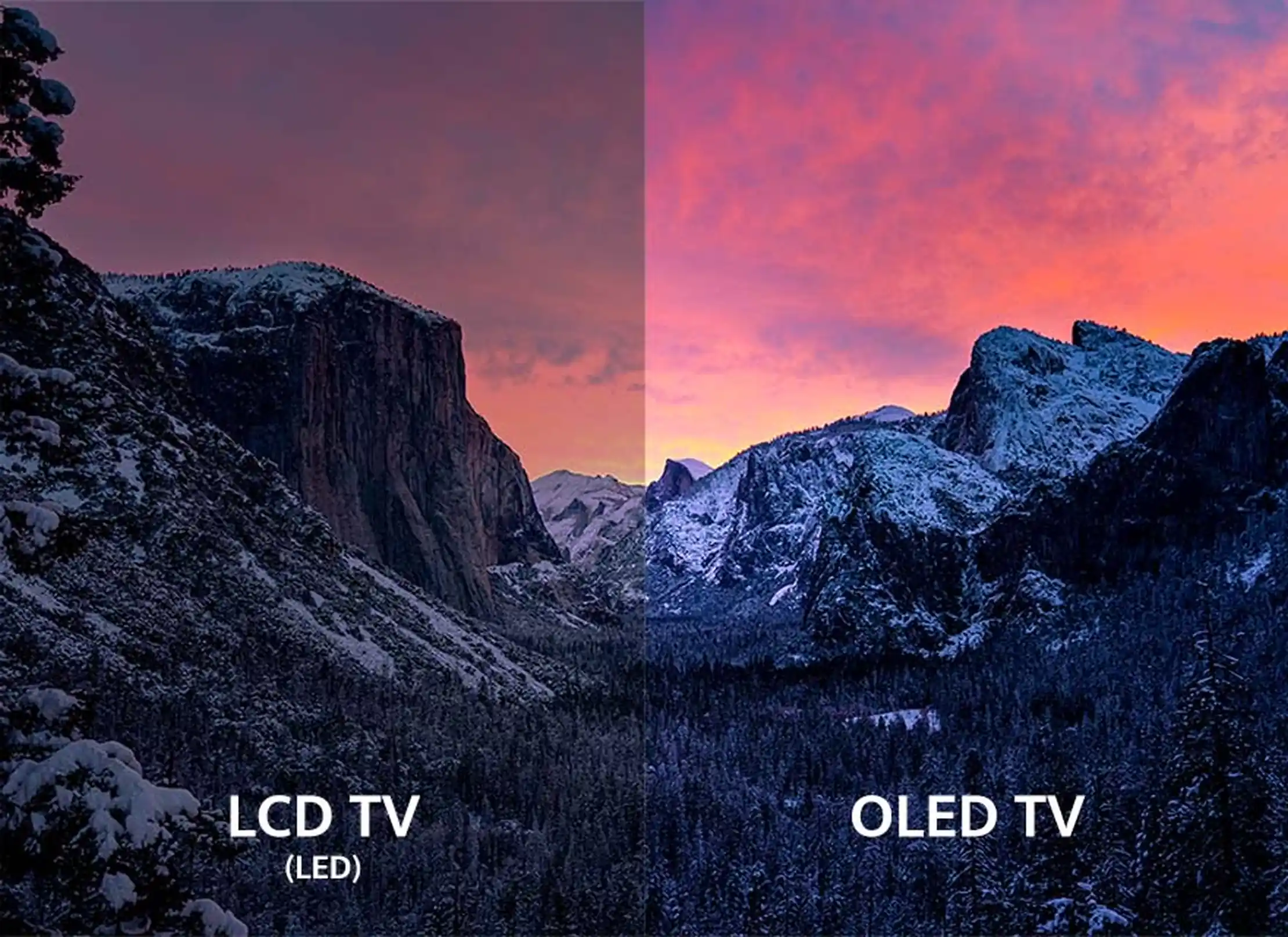
OLED (Organic Light Emitting Diode) TVs use self-emissive pixels, meaning each pixel lights itself and can turn completely off.
This results in true blacks and unmatched contrast.
Pros
✔ Perfect black levels
✔ Infinite contrast ratio
✔ Excellent viewing angles
✔ Ultra-thin design
Cons
✖ Expensive
✖ Risk of image retention/burn-in (reduced but not zero)
✖ Lower peak brightness than Mini-LED
Best for:
- Movie lovers
- Home theater setups
- Dark room viewing
- Premium TV buyers
3️⃣ QLED TV – Enhanced LED with Quantum Dots
What is QLED?
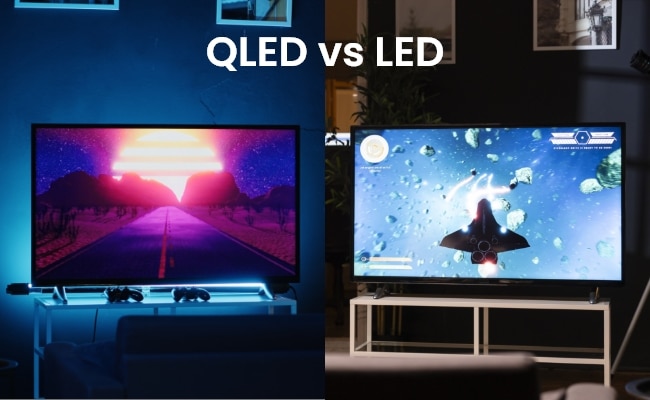
QLED is an advanced LED-LCD TV that uses a Quantum Dot layer to improve brightness and color volume.
Important to know:
👉 QLED is NOT self-emissive like OLED.
Pros
✔ Very high brightness
✔ Vivid colors
✔ No burn-in risk
✔ Better lifespan than OLED
Cons
✖ Still uses LED backlight
✖ Blacks not as deep as OLED
✖ Contrast depends on local dimming quality
Best for:
- Bright living rooms
- Sports & TV shows
- Users worried about burn-in
4️⃣ Mini-LED TV – The Best of LED Technology Today
What is Mini-LED?
Mini-LED TVs use thousands of tiny LEDs instead of hundreds. This allows more local dimming zones, dramatically improving contrast and brightness.
Why Mini-LED Matters
Mini-LED solves many weaknesses of traditional LED TVs.
Pros
✔ Extremely high brightness
✔ Much better contrast than LED/QLED
✔ Minimal blooming
✔ No burn-in risk
Cons
✖ More expensive than regular LED
✖ Still not true pixel-level control like OLED
Best for:
- HDR lovers
- Bright + dark room usage
- Gaming & sports
- Users wanting OLED-like performance without burn-in risk
5️⃣ MicroLED TV – The Future of Television

What is MicroLED?
MicroLED uses millions of microscopic self-emissive LEDs, combining the strengths of OLED + LED without their weaknesses.
Each pixel is:
- Self-lit
- Inorganic (no burn-in)
- Extremely bright
Pros
✔ Perfect blacks
✔ Very high brightness
✔ No burn-in
✔ Long lifespan
Cons
✖ Extremely expensive
✖ Limited consumer availability
✖ Large sizes only
Best for:
- Ultra-premium buyers
- Commercial & luxury installations
- Future-ready tech enthusiasts
🔍 Quick Comparison Table
| Technology | Black Levels | Brightness | Burn-in Risk | Price |
|---|---|---|---|---|
| LED | Average | Good | No | Low |
| QLED | Good | Very High | No | Medium |
| OLED | Perfect | Medium | Possible | High |
| Mini-LED | Very Good | Extremely High | No | Medium-High |
| MicroLED | Perfect | Extreme | No | Very High |
Which TV Display Technology Should You Choose in 2026?
Choose LED if:
✔ Budget matters
✔ You want reliability
Choose QLED if:
✔ You watch TV in bright rooms
✔ You want vibrant colors
Choose OLED if:
✔ You love cinema-like picture quality
✔ You mostly watch movies & OTT
Choose Mini-LED if:
✔ You want near-OLED quality without burn-in risk
✔ You watch HDR, sports, or play games
Choose MicroLED if:
✔ Budget is not a concern
✔ You want the best display technology available
Final Thoughts
TV display technology has evolved rapidly, and 2026 offers more choices than ever. While OLED and Mini-LED dominate the premium segment, LED and QLED remain practical for most users. MicroLED, although impressive, is still a glimpse into the future.
Understanding these technologies ensures you buy smarter, not costlier.